How to Host a Printable Murder Mystery Night at Home
Looking for a fast, budget friendly way to turn any living room into a detective’s office? A printable murder mystery gives you instant access to evidence, suspects, and secrets you can solve tonight.
In this guide, you will learn how to plan and host a printable murder mystery from setup to solution reveal. The key takeaway: choose a well structured evidence file, prep your space and players, and use a simple flow that keeps everyone investigating, debating, and having fun.
What is a Printable Murder Mystery?
A printable murder mystery is a download and play game built around an investigation. Instead of scripts and costumes, you get documents, photos, transcripts, and other artifacts to analyze. You can print everything at home or read on devices.
Unlike roleplay heavy dinner parties, these games focus on deduction. Players sift through evidence, form theories, and test them against timelines and alibis. It works for 2 to 8 players and fits game nights, date nights, or team events.
Key elements to expect
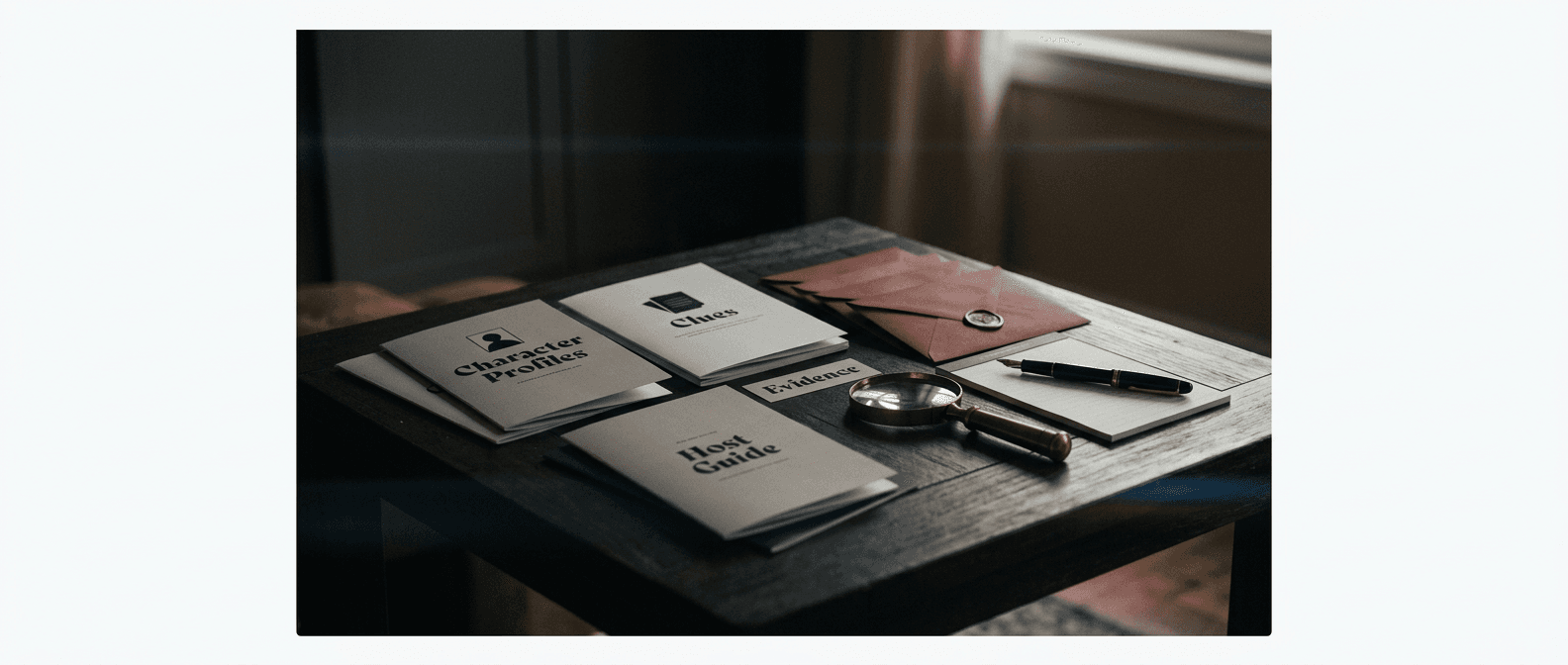
- Evidence packets: suspect profiles, witness statements, texts, emails, news clippings, and a solution envelope
- Clear objective: identify the culprit and explain the how and why using documented clues
- Flexible format: play in one session or split across multiple sittings
Why they are popular
- Instant gratification: downloadable mystery games start the same day
- Low prep: no complex props or costumes required
- High immersion: realistic case files make players feel like investigators
Planning Your Night
Great cases shine when the setup is smooth. A little prep multiplies the tension and fun.
Pick the right case
- Difficulty: aim medium for mixed groups; pick harder cases for veteran sleuths
- Theme fit: coastal, city, historical, or tech themes can match your group’s taste
- Player count: check the recommended number and whether puzzles scale well to 2, 4, or 8
Schedule and timing
- Block 90 to 150 minutes for a standard investigation
- Add 15 minutes upfront for overview and role assignment, and 10 minutes at the end for the reveal
Materials checklist
- Printed evidence file or tablets with PDFs loaded
- Sticky notes, highlighters, and pens
- A central table or wall space to lay out photos, timelines, and alibis
- Envelopes for phases or locked sections, if the file is structured that way
Setup That Feels Like a Real Case
Set the scene without overdoing it. The goal is clarity plus a touch of mood.
Room layout
- Create an Evidence Table for documents, photos, and exhibits
- Reserve a Discussion Zone with comfortable seating for debate
- Keep a whiteboard or poster sheet for a master timeline and suspect map
Light, sound, and props
- Dim lights slightly and use a lamp over the Evidence Table
- Play low volume ambient noir or city soundscapes
- Optional: manila folders labeled with exhibit letters to group documents
The Step by Step Flow
The right flow keeps energy high and reduces backtracking.
Step 1: Briefing and ground rules
- Read the case intro aloud and confirm the win condition
- Assign simple roles: Lead Reader, Evidence Wrangler, Timeline Scribe
- Agree on no phone spoilers and a solution reveal only when everyone is ready
Step 2: First pass skim
- Sort evidence into categories: scene facts, alibis, motives, timelines, forensics
- Skim everything before deep dives to spot contradictions early
Step 3: Build the board
- Create a timeline of the day of the crime with timestamps from texts, calls, and sightings
- Pin suspects with columns for motive, means, and opportunity
Step 4: Test hypotheses
- Form 2 to 3 leading theories with specific claims
- Try to falsify each claim using primary sources in the file
- If a theory survives, hunt for missing links like access to the weapon or knowledge of a code
Step 5: Red flag pass
- Re check anomalies: odd phrasing in a witness note, a receipt time, or inconsistent weather details
- Mark anything unexplained and circle back before the reveal
Step 6: The reveal
- Each player states their final theory with evidence citations
- Open the solution only after consensus or a final vote
Roles and Variations for Any Group Size
Different sizes need different rhythms. Adjust to keep everyone engaged.
For two players
- Alternate Lead Reader and Timeline Scribe each phase
- Use a 5 minute timer for theory pitches to keep momentum
For four to six players
- Split into two teams for parallel analysis: Motive Team and Timeline Team
- Regroup every 15 minutes to cross check findings
For larger groups or teams
- Use rotating stations: Evidence, Witness, and Forensics
- Assign a Moderator to manage time and unlock phased packets
Evidence File Deep Dives
Understanding how to analyze common documents helps you crack harder cases.
Autopsy and forensics
- Look for time of death windows and compare to alibis
- Note toxins, residues, or injuries that imply method
Digital trails
- Cross reference text message timestamps with photos, CCTV notes, or transit schedules
- Emails may reveal motive or planned alibis written in careful language
Financial and location data
- Receipts, bank logs, or ride share trips can confirm or break an alibi
- Map movements on your timeline to expose impossible overlaps
Hosting Tips That Boost Immersion
Small touches go a long way in a printable murder mystery.
Pacing and breaks
- Plan one short break around the midpoint for snacks and reset
- If energy dips, do a quick lightning round: each player offers one insight and one open question
Clue hygiene
- Keep originals unmarked; use sticky notes on sleeves or copies
- Photograph your board at checkpoints to avoid losing the thread
Social dynamics
- Invite quieter players to own a document set or role
- Celebrate near misses and clever dead ends to keep morale high
Printable vs Physical Mystery Kits
If you are deciding between formats, consider access, setup, and replay.
Here is a quick comparison of printable and physical kits.
| Factor | Printable Mystery | Physical Kit |
|---|---|---|
| Access speed | Instant download | Shipping time |
| Cost | Often lower per case | Typically higher per box |
| Setup | Print and organize | Unbox with preset props |
| Flexibility | Easy to reprint and share within a group | Components fixed, limited copies |
| Customization | Often supports custom cases | Usually fixed content |
Choosing a Quality Case
Not all cases are equal. Use this mini checklist when shopping.
Content quality
- Mixed media evidence: photos, statements, emails, and reports
- Internal consistency and fewer gotcha twists
Clarity of goals
- A clear win condition and defined suspect pool
- Hints available but optional
Practicalities
- Works well for 2 to 8 players with flexible timing
- Includes a clean solution section with citations back to the evidence
Optional Tech and Accessibility
Make the experience smoother for all players.
Digital and hybrid play
- Use shared folders so tablet readers can zoom images
- Run a central screen for the timeline and suspect board
Accessibility tweaks
- Offer large print pages for statements and autopsies
- Provide color safe versions of photos when possible
Sample 2 Hour Run of Show
Use this as a template and adjust based on your group.
0:00 to 0:10
- Welcome, snacks, and rules
- Assign roles and skim the case intro
0:10 to 0:35
- First pass sort and board setup
- Highlight early contradictions
0:35 to 1:15
- Deep dives in teams
- Timeline reconciliation and motive mapping
1:15 to 1:35
- Red flag pass and theory testing
1:35 to 1:55
- Final arguments and vote
1:55 to 2:00
- Reveal and debrief
Using Custom Cases for Teams and Events
For corporate groups or family milestones, a custom murder mystery can weave in familiar names and settings.
When to go custom
- Team building with shared context boosts engagement
- Birthdays, anniversaries, or city themed weekends
What to provide the creator
- City, venue types, and up to six suspects with relationships
- Tone preference: gritty, cozy, or cinematic
Hosting FAQs in Brief
These quick answers help you prep with confidence.
Do we need costumes or accents?
No. They can add flavor, but the case is designed to stand on evidence and logic.
Can we play without a printer?
Yes. Load PDFs on laptops or tablets and use shared note tools to map timelines.
How hard are these games?
Most list a difficulty. Start with medium if you have first timers, then scale up.
After the Reveal: Debrief and Replay Value
The debrief is half the fun. Walk through the official solution and trace each key clue. Invite players to share the moment the truth clicked. When replaying with new friends, reshuffle evidence, switch roles, or try a harder case.
Key Takeaways
- Choose a structured printable murder mystery with varied, consistent evidence
- Set the room with an Evidence Table, clear roles, and a shared timeline
- Follow a step by step flow from skim to theory to reveal
- Adjust roles for your group size to keep everyone engaged
- Debrief the evidence trail to cement the story and celebrate wins
Happy sleuthing. May your alibis crack and your timelines align at just the right moment.